DRAG SYNDROME
Writer: Christer Reitan Photographer: Karina Rønning
During the Art of Drag Seminar of 2025, Lady Francesca and producer Daniel Vais from the world renowned, British drag collective DRAG SYNDROME (est. 2018) held a lecture about the importance of acceptance, talent and pure joy. The lecture touched upon the importance of tolerance and acceptance, and how important it is to dare to think and act outside of the box. As a drag collective consisting of people with Down’s Syndrome, DRAG SYNDROME takes everything you thought drag could be, and bedazzles it!
Read more about Drag Syndrome here: Homepage
Norwegian version of the text further below.
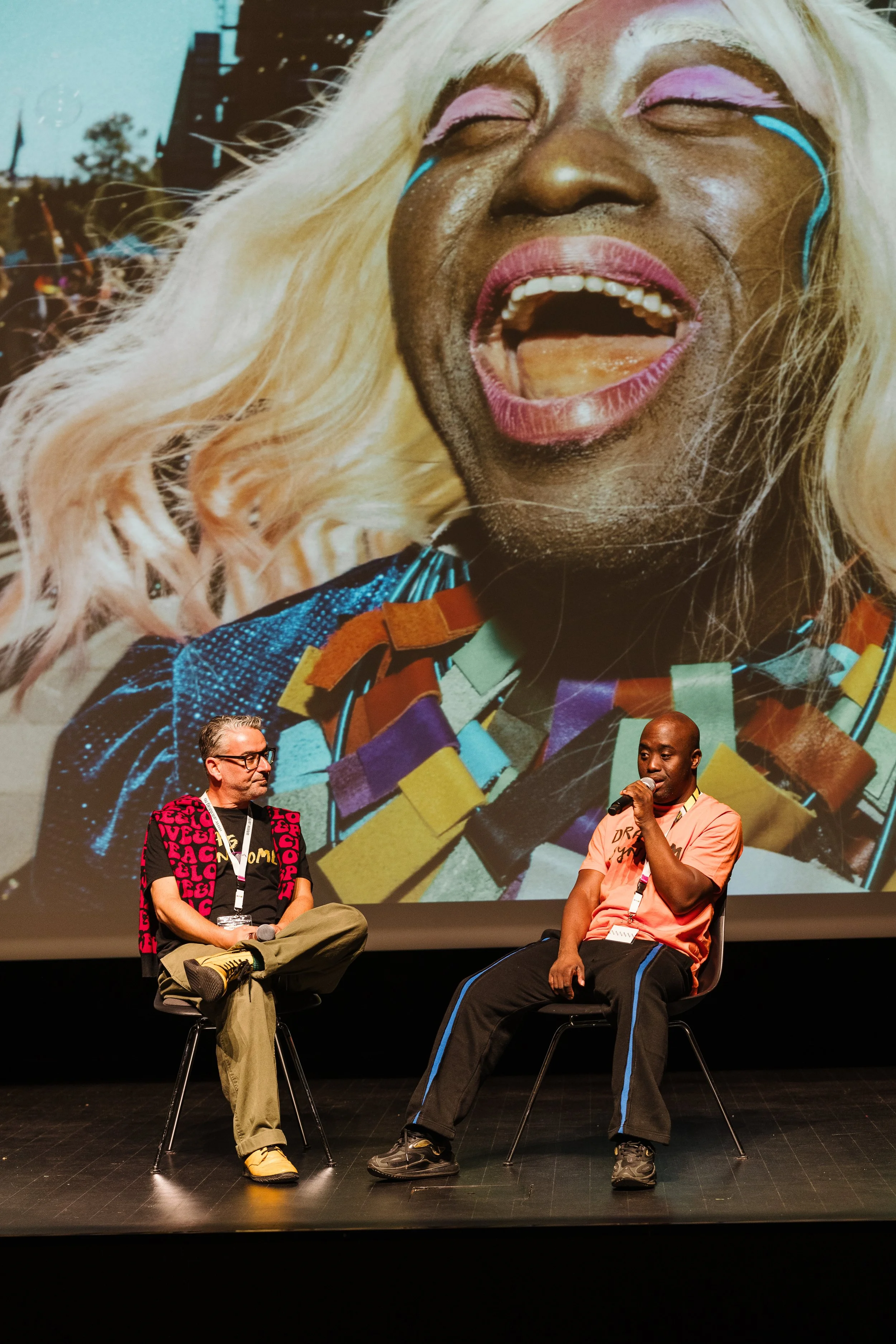
Showing the world that people with Down’s Syndrome really (to quote David Vais) “are persons with super powers”, the collective shows the world that the sky is the limit by daring to challenge the social stigmas and societal perspective. Daring to stand in torrents of hate and judgement, DRAG SYNDROME takes these perspectives and uses them as fuel to show the world that drag as an artform is universal, and how important it is to break through our own prejudices and preconceived notions to open up our minds and hearts for what’s perceived as different. The drag collective focuses on challenging perceptions on drag and Down’s Syndrome, and uses inclusivity as a tool to do so.
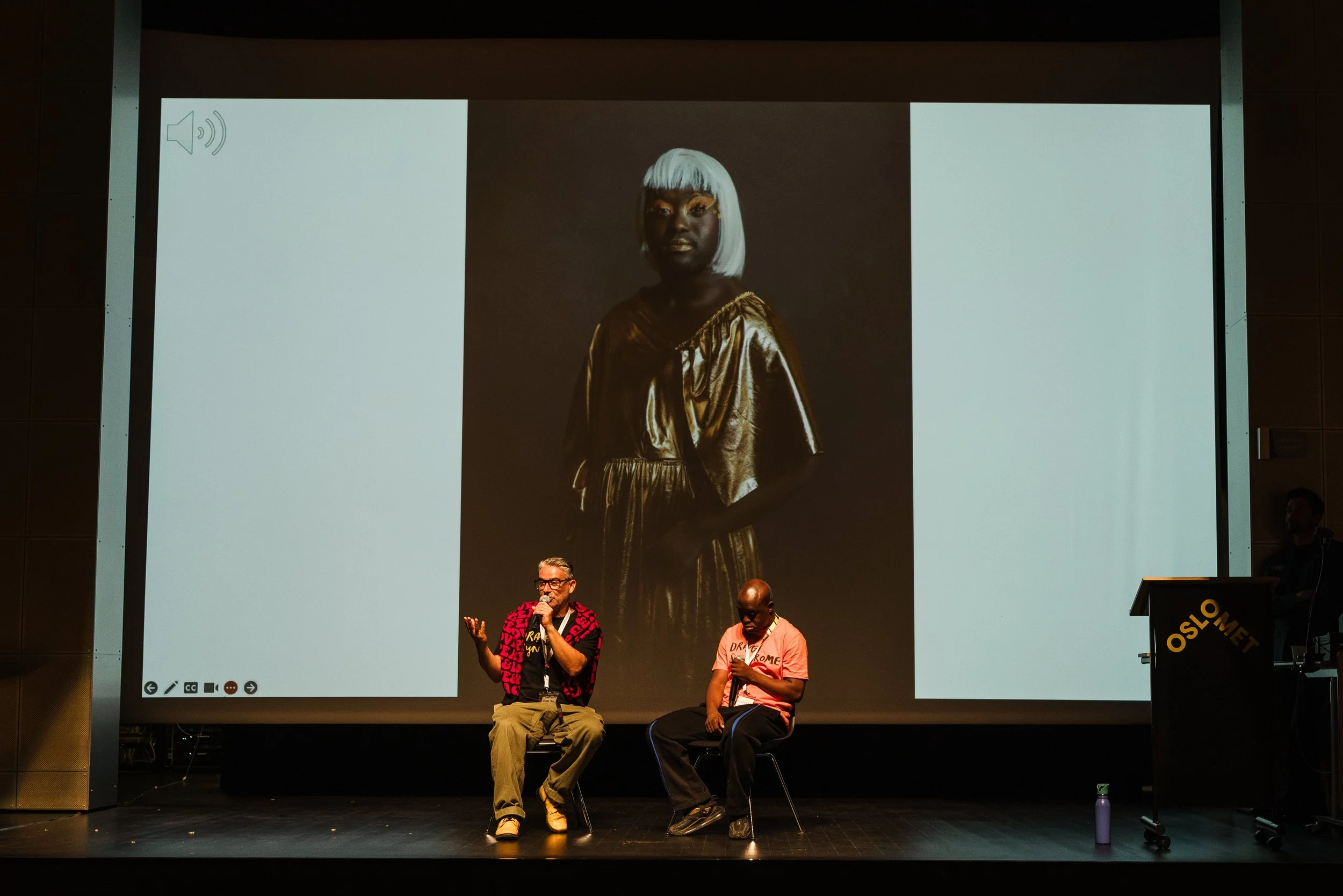
“Because we are a drag company for artists with Down’s Syndrome, sometimes the outside world sees us a bit different. The drag world actually really embraced us, and people like Remi [Johansen Hovda, the curator of Art of Drag Seminar 2025] [...] are active agents of change, they are literally helping the world to change, to be a better place”
Quote: Daniel Vals
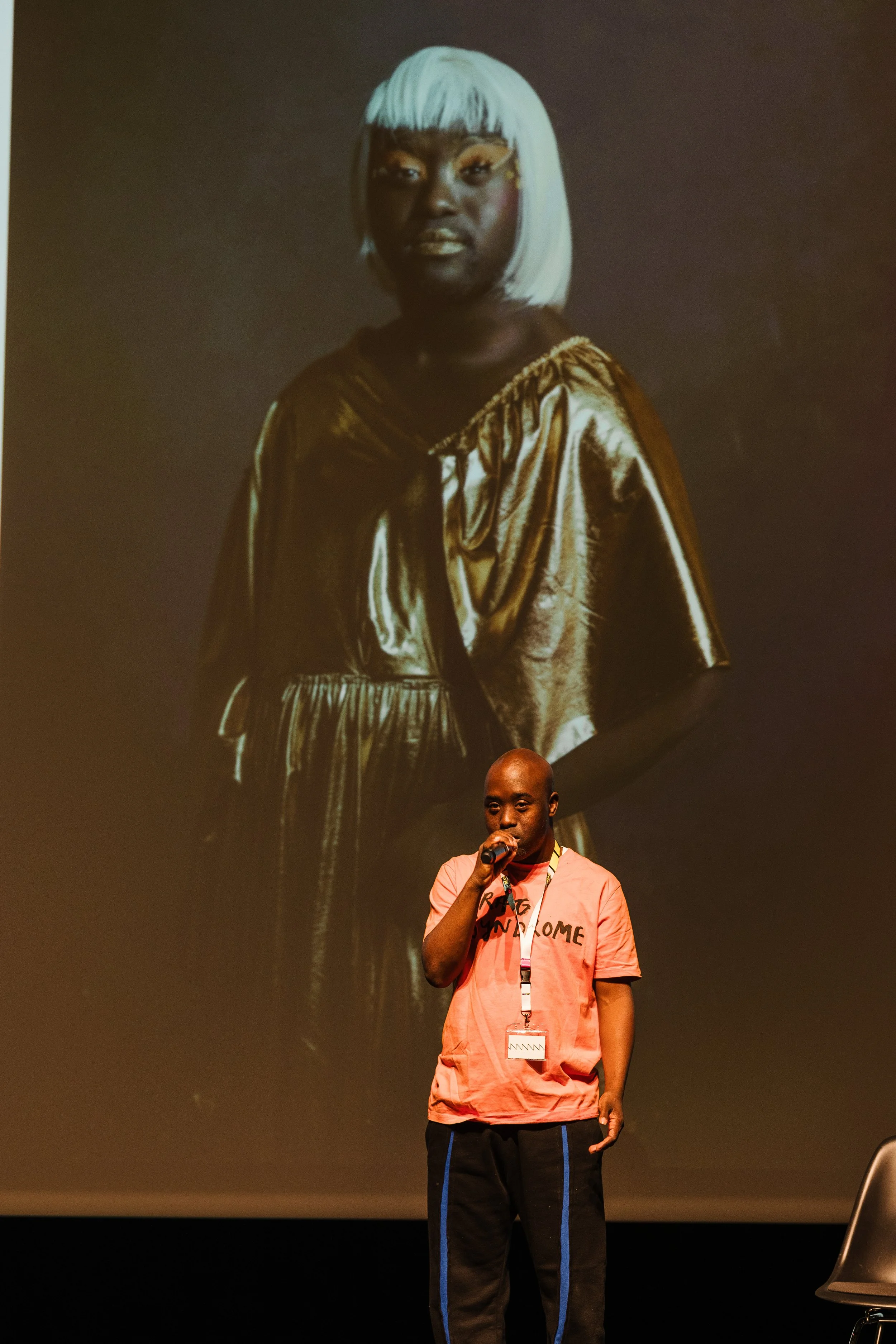
The lecture had its main focus on the magic of drag, and how the artform could change social perception on marginalized people. People with Down’s Syndrome are often seen as people without their own autonomy, and there’s a misconception in parts of society that labels those with Down’s Syndrome as “childlike”. DRAG SYNDROME gives the artist the autonomy they deserve and shows the general public that the preconceived notions they might have could be false. Through dance and the playfulness and transformation that drag offers, the artists get the opportunity to grow. According to David Vais, the torrent of hate and negative feedback the company faces was harrowing at first, but was later used as a catalyst for doing more performances. They decided to overlook the negative comments and focus on the positive ones.
Beyond the talks about social and structural challenges, the impromptu performance by Lady Francesca herself carried an equally important message. Another, more nonverbal component to the lecture was the impulsivity and pure joy and confidence that Lady Francesca radiated on stage. It was such a contagious experience, and there wasn’t a single audience member that wasn’t captivated by the sheer joy shown on stage. This part of the lecture secondhandedly taught us to “just go for it”, which was a refreshing and authentic way of communicating the importance of drag in all parts of society.
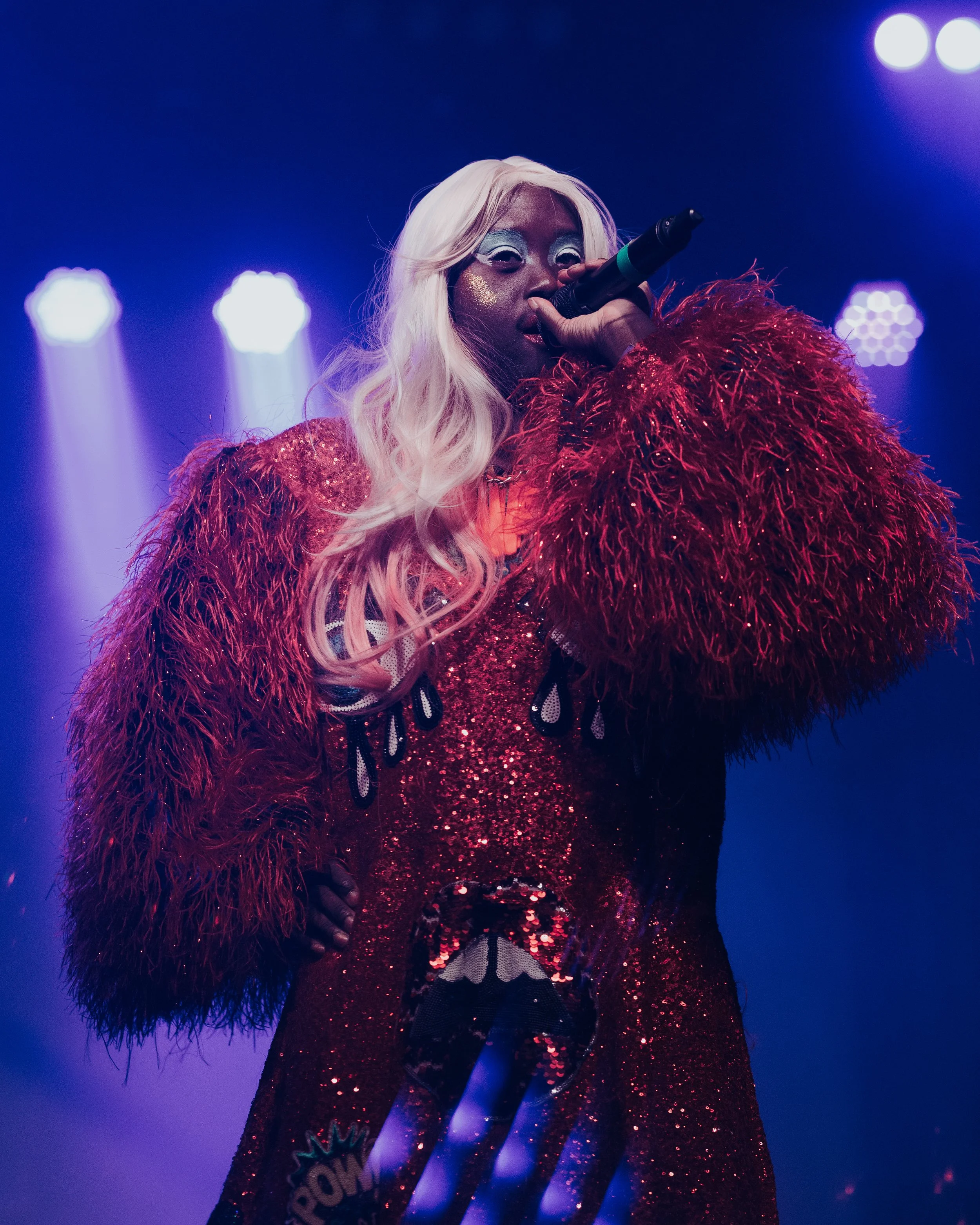
Lady Francesca was also one of the artists at the drag show D.R.A.G. -Gender, Queer and Drag as a Phenomenological Tool Towards Social Change. A drag show in connection with. Photographer: Karina Rønning
The importance of talking about these issues, and also showing both directly and indirectly how DRAG SYNDROME decided to tackle them, was both refreshing and mindopening. The perseverance and tenacity of the producer and the artists is both refreshing and inspiring. The way this opened up for thoughts and reflection in the audience, both via the words from producer David Vais, and the words and actions and pure dedication from Lady Francesca. This can open up for more discussions about inclusivity and de-colonization, as well as breaking down societal barriers in regards to what is and isn’t considered drag. The lecture and the drag collective itself are urging the audience of both the shows produced by DRAG SYNDROME, and also this lecture, to use the confidence and joy that’s radiating from stage into their day-to-day life, and also to challenge their own prejudices.
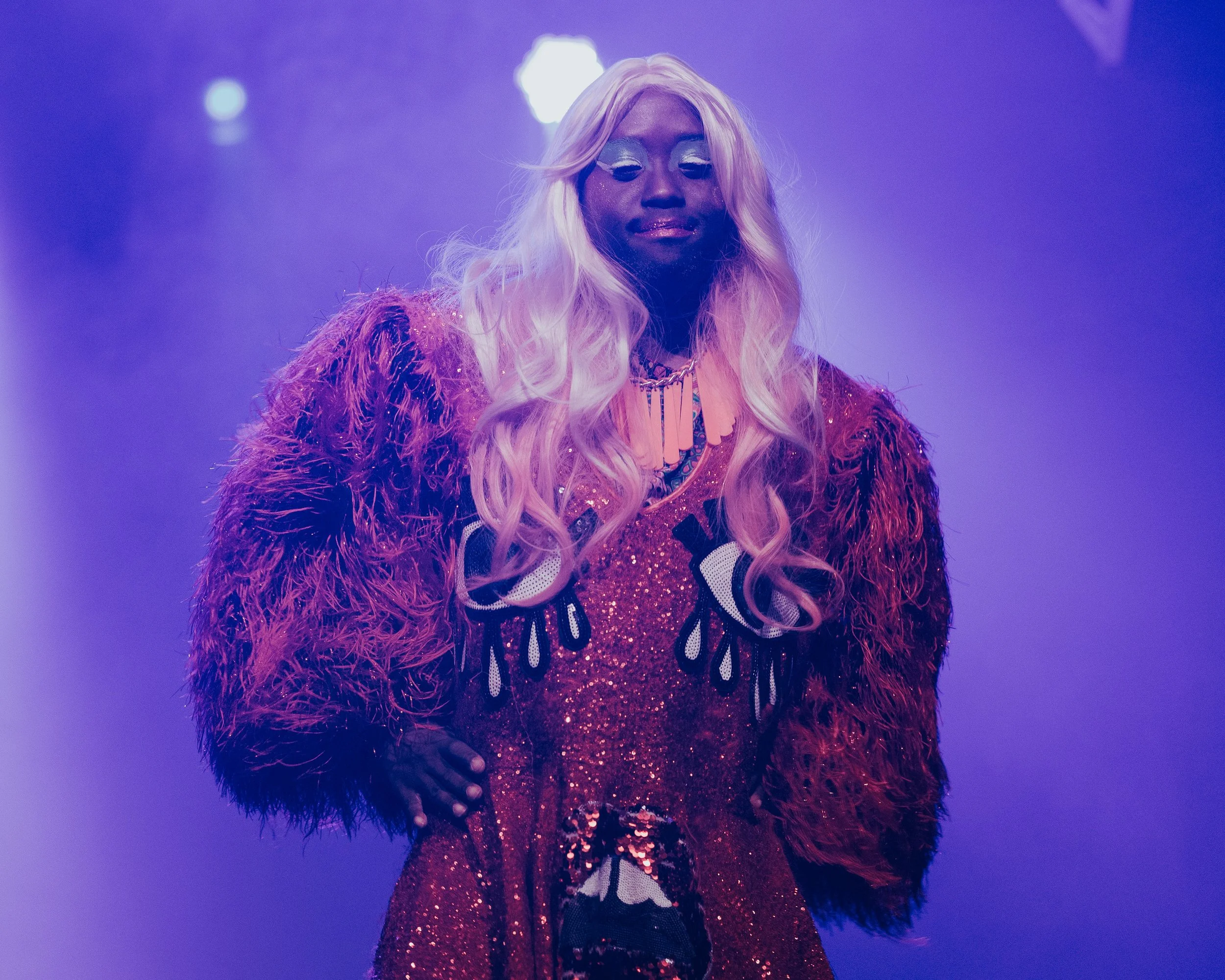
The lecture by DRAG SYNDROME was a way to challenge each and everyone’s prejudices regarding inclusion, and also their own thoughts and views on art, drag as an artform and Down’s Syndrome in general.
DRAG SYNDROME
Forfatter: Christer Reitan Forograf: Karina Rønning
NORWEGIAN VERSION
Under The Art of Drag Seminar 2025 holdt Lady Francesca og produsent Daniel Vais fra det verdenskjente britiske dragkollektivet DRAG SYNDROME (etablert i 2018) et foredrag om betydningen av aksept, talent og ren glede. Foredraget tok opp viktigheten av toleranse og å tørre å tenke og handle utenfor boksen. Som et dragkollektiv bestående av mennesker med Downs syndrom, tar DRAG SYNDROME alt du trodde drag kunne være – og gjør det enda mer glitrende!
Les mer om Drag Syndrome her: hjemmeside
Gjennom sitt arbeid viser kollektivet verden at mennesker med Downs syndrom virkelig (for å sitere David Vais) «er personer med superkrefter». De viser at himmelen er grensen ved å utfordre sosiale stigmaer og samfunnets perspektiver. Til tross for hat og fordømmelse bruker DRAG SYNDROME disse holdningene som drivkraft til å vise verden at drag som kunstform er universell, og at det er avgjørende å bryte ned fordommer og åpne både sinn og hjerter for det som blir oppfattet som annerledes. Kollektivet fokuserer på å utfordre oppfatninger av både drag og Downs syndrom, og bruker inkludering som et verktøy til å gjøre nettopp det.
“Because we are a drag company for artists with Down’s Syndrome, sometimes the outside world sees us a bit different. The drag world actually really embraced us, and people like Remi [Johansen Hovda, the curator of Art of Drag Seminar 2025] [...] are active agents of change, they are literally helping the world to change, to be a better place.”
Foredragets hovedfokus var på dragens magi, og hvordan kunstformen kan bidra til å endre samfunnets oppfatning av marginaliserte grupper. Personer med Downs syndrom blir ofte sett på som mennesker uten egen autonomi, og det finnes en misoppfatning i deler av samfunnet som beskriver mennesker med Downs syndrom som «barnslige». DRAG SYNDROME gir kunstnerne den autonomien de fortjener, og viser allmennheten at disse forutinntatte holdningene ofte er feil. Gjennom dans, lekenhet og den transformasjonen drag tilbyr, får kunstnerne muligheten til å vokse. Ifølge David Vais var strømmen av hat og negativ tilbakemelding selskapet møtte i starten vanskelig, men de valgte å bruke den som drivkraft til å gjøre enda flere opptredener. De bestemte seg for å overse de negative kommentarene og fokusere på de positive.
Utover samtalen om sosiale og strukturelle utfordringer bar den improviserte opptredenen til Lady Francesca selv et like viktig budskap. En annen, mer ikke-verbal del av foredraget var den spontane gleden og selvtilliten Lady Francesca utstrålte på scenen. Det var en smittende opplevelse – ingen i publikum kunne unngå å bli berørt av den rene gleden som ble vist. Denne delen av foredraget lærte oss indirekte å “bare gå for det”, en forfriskende og autentisk måte å formidle betydningen av drag i alle deler av samfunnet på.
Betydningen av å snakke om disse temaene – og å vise, både direkte og indirekte, hvordan DRAG SYNDROME har valgt å håndtere dem – var både forfriskende og tankevekkende. Produsentens og kunstnernes utholdenhet og styrke var inspirerende. Gjennom både ordene til produsent David Vais og handlingene, ordene og dedikasjonen til Lady Francesca, ble det åpnet opp for refleksjon og samtale i publikum. Dette kan bidra til videre diskusjoner om inkludering, avkolonisering og nedbryting av samfunnets barrierer for hva som blir – og ikke blir – ansett som drag.
Foredraget og dragkollektivet selv oppfordret publikum, både til forestillingene produsert av DRAG SYNDROME og til denne forelesningen, om å ta med seg gleden og selvtilliten som stråler fra scenen inn i hverdagen – og til å utfordre sine egne fordommer.
Foredraget med DRAG SYNDROME ble dermed en måte å utfordre hver enkelt av oss på – både i synet på inkludering, og i våre egne tanker om kunst, drag som kunstform og Downs syndrom generelt.